










Finasteride: Benefits, Side Effects, Myths & Monitoring
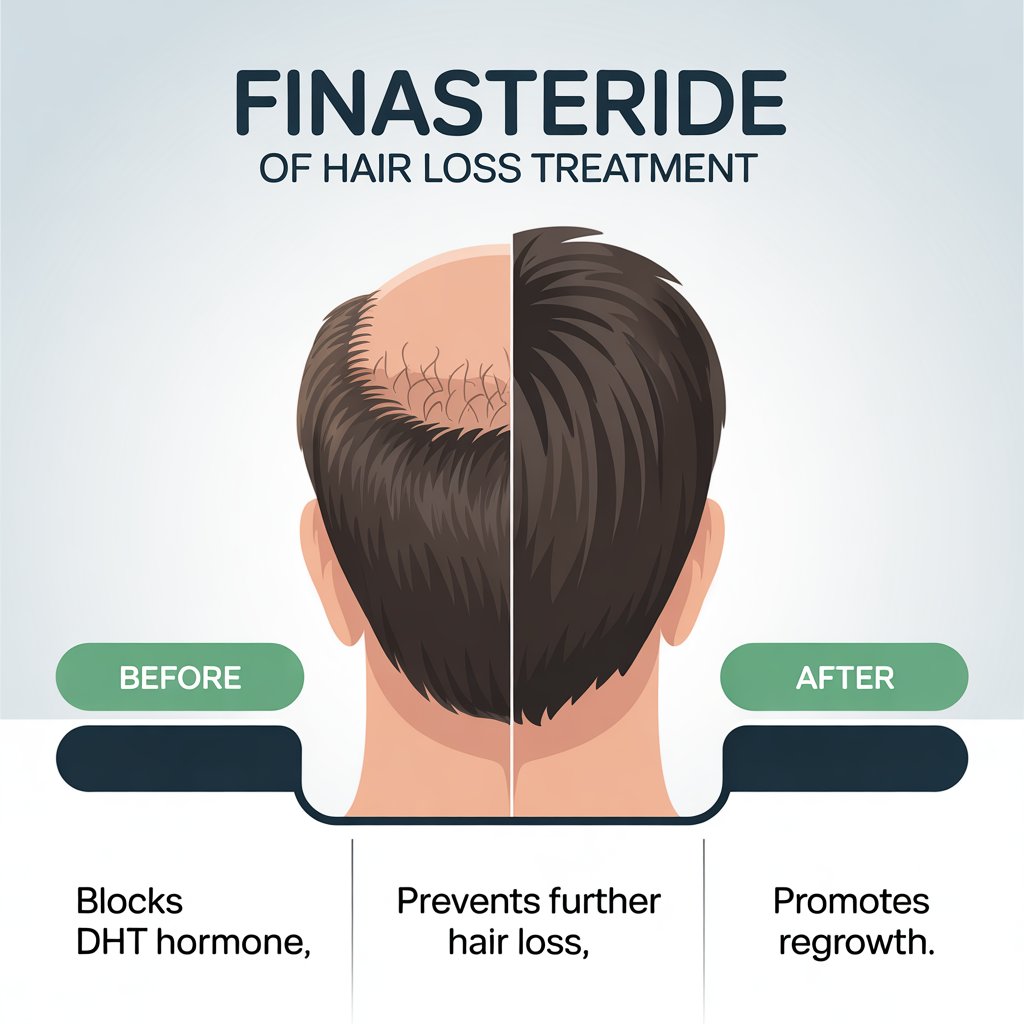
One of the most commonly prescribed medications against male pattern hair loss (androgenetic alopecia) and swollen prostate (benign prostatic hyperplasia) is called Finasteride. This medication, which has been approved by the regulatory authorities such as the U.S. FDA, has seen millions of men slow their hair thinning and regrow their hair at a slower rate.
Nevertheless, Finasteride is not without controversy because of its side effects and incorrect data on the Internet. This paper is a reduction in the nature of finasteride, its advantages, sexual side effects information, the use of finasteride in pregnancy, and the importance of professional tele-consultation before treatment.
What is Finasteride and how does it work?
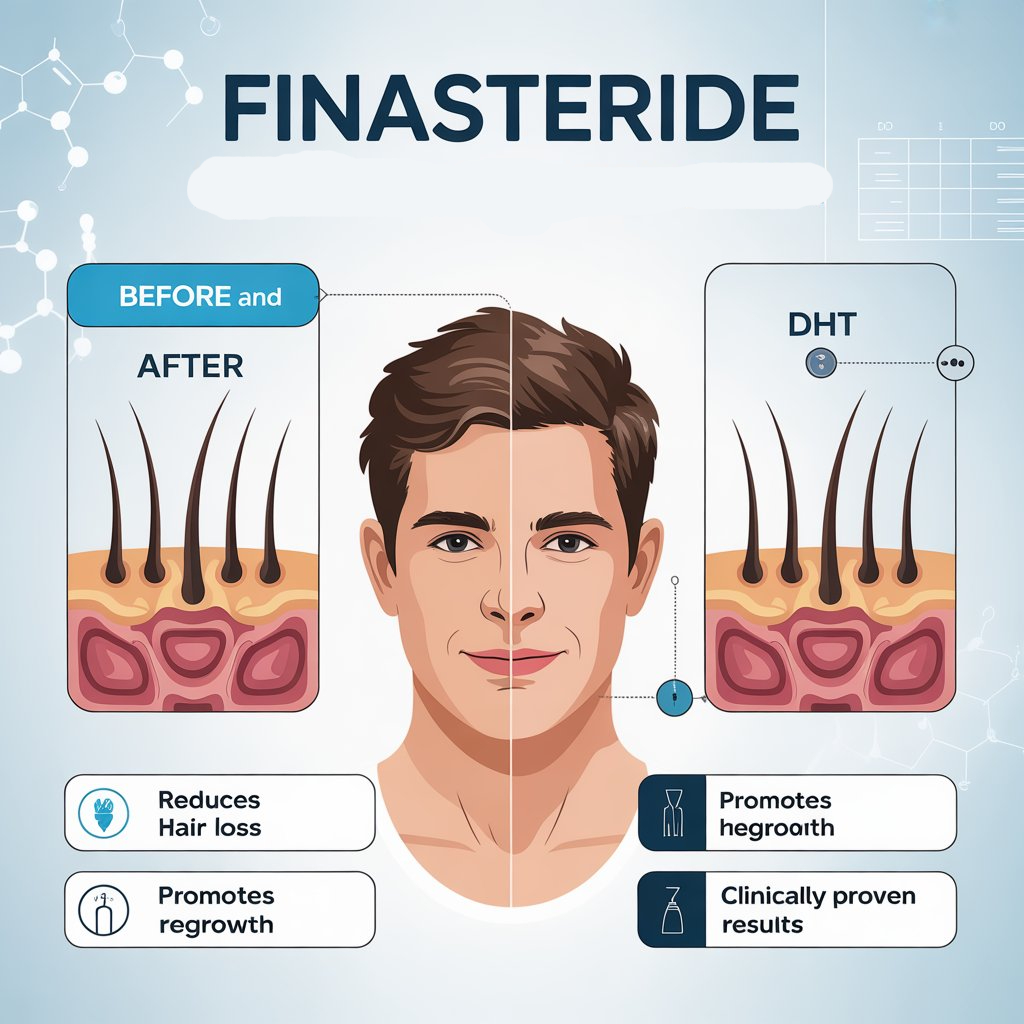
Finasteride acts by inhibiting the action of the enzyme 5-alpha-reductase that transforms testosterone into dihydrotestosterone (DHT) – the hormone that causes the hair follicles to shrink and the hair to fall off in men predisposed to it by genes.
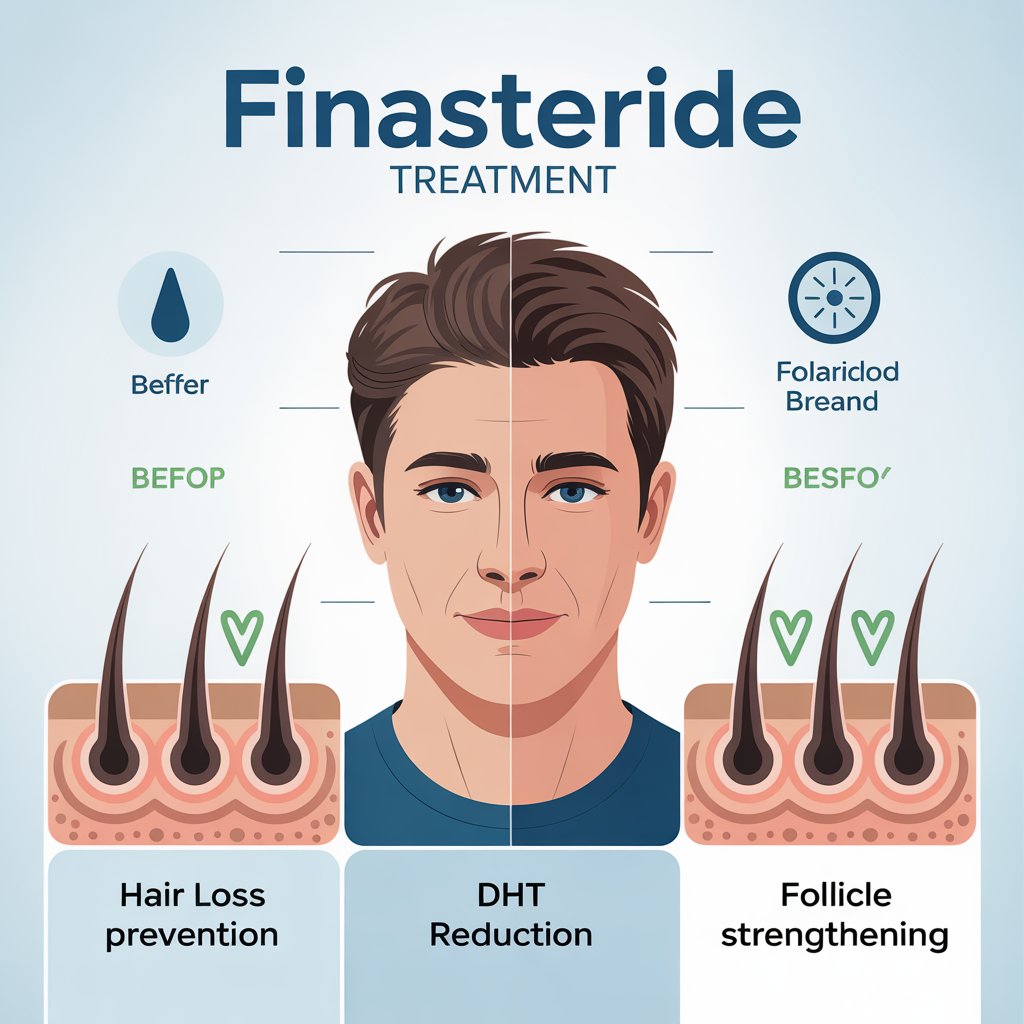
Finasteride helps by reducing DHT levels in the blood and the scalp:
- Slow down loss of hair and receding hairline.
- Enhance the growth of hair and raise the thickness.
- Avert additional development of male pattern baldness.
It is usually used as a 1 mg tablet per day to treat hair loss (trade names are Propecia 1mg/day and generic Finasteride).
Benefits of Finasteride
Finasteride has a number of evidence-based advantages when taken regularly and with the medical oversight:
Hair Growth Proven clinically
In clinical trials, over 8090 percent of men who take finasteride report that hair loss is lessened and improvement is noticeable in 3 to 6 months.
Long-Term Hair Maintenance
The persistence of use serves to sustain the already existing hair and it is thus a good long term treatment in combination with other use therapy such as minoxidil.
Once-Daily Convenience
The small oral tablet is simple to swallow and can easily be incorporated in the daily routine.
Improved Outcomes using Combinations Therapy
The current state of telehealth clinics suggests Finasteride + Minoxidil to use in combination to enhance growth and scalp coverage.
Understanding Sexual Side Effects: What the Data Shows
One of the most pressing concerns of men who consider using finasteride is that this medication can have certain Sexual Side Effects including loss of libido, erectile dysfunction, or a decrease in the volume of semen. Nevertheless, the evidence on sexual side effects of these drugs, based on large clinical trials, indicates that they are comparatively uncommon and can be reversed.
Clinical trials indicate that 1 2 per cent of males can have mild sexual side effects
- Majority of cases are cured in a few weeks or months of withdrawal or even when the person continues taking it until the body adapts.
Long-term follow-up research has never proven to be permanent in a vast majority of the users
Although these risks are possibly overstated on online forums, one should bear in mind that the best data is that which is obtained after controlled studies. Before and during treatment, it is always better to discuss any issues with your healthcare provider to make sure the treatment is individual and accompanied by assurance.
Pregnancy Handling Caution
Finasteride cannot be prescribed during pregnancy. When a pregnant woman is exposed to the medication, it may develop birth defects in the developing male fetus.
Safety Precautions:
Women who are pregnant or who might get pregnant should not touch finasteride pills that are crushed or broken.
- The undamaged tablet coating keeps the drug themselves out of the bloodstream via the skin, thus, handling entire pills is usually not a serious issue to other people.
- Women should not take finasteride in case of loss of hair unless given a special prescription under the supervision of a specialist.
This is a very important pregnancy handling warning – finasteride should always be kept in a safe place, where children and doctors are not present.
Common Myths About Finasteride
Decades of clinical use have not known how to overcome misinformation about finasteride. And we may part with fiction and fact:
Myth 1: Finasteride renders infertile
Fact: Finasteride does not permanently make healthy men infertile, as there is no evidence to show such a fact. There are temporary alterations in semen volume but this is reversible.
Myth 2: When you quit taking finasteride, you start losing your hair worse than ever
Fact: To stop finasteride, it is necessary to just keep the natural rate of hair loss, not to accelerate it.
Myths 3: Finasteride influences testosterone
Proof: Finasteride does not inhibit testosterone, but DHT. Indeed, the serum testosterone levels can slightly rise in normal levels.
Myth 4: Side effects are permanent
Guerra: The majority of the side effects are not only rare but reversible and mild with treatment discontinuation or dosage change.
Follow-Up and Medical Surveillance
Regular monitoring is suggested to achieve safety and the best outcomes. Your teleconsultation service online or your doctor may:
Examine your medical history and contraindications
Check liver function, if suggested
- Check scalp and hair density every 3-6 months.
- Change dosage or combination therapy where necessary.
Modern telemedicine platforms make this process seamless. With Finasteride Product + Teleconsult services, you can receive professional evaluation, prescriptions, and follow-ups — all from the comfort of your home.
Where to Buy Finasteride Safely
If you’re considering starting finasteride, always source it from a licensed clinic. For expert in-clinic consultations, visit Nexus Clinic or book a teleconsultation with certified doctors through platforms like DoctorOnCall for in-person evaluation and hair restoration guidance.
These trusted providers ensure you receive authentic finasteride products and professional medical supervision — reducing the risk of counterfeit or unsafe alternatives.
The Bottom Line
Finasteride remains one of the most effective treatments for male pattern hair loss, with well-documented benefits and a favorable safety profile when monitored properly.
Understanding the Sexual Side Effects Data, following Pregnancy Handling Precautions, and using professional Finasteride Product + Teleconsult services can help you use this treatment safely and confidently — achieving real, long-term hair restoration results.

Written by Dr. Chong Zhan Pong, MBBS, International Medical University (IMU), Malaysia

Reviewed by Dr. Von Chiao Wen, MD (General Medicine), N.I. Pirogov Russian National Research Medical University, Russia
